
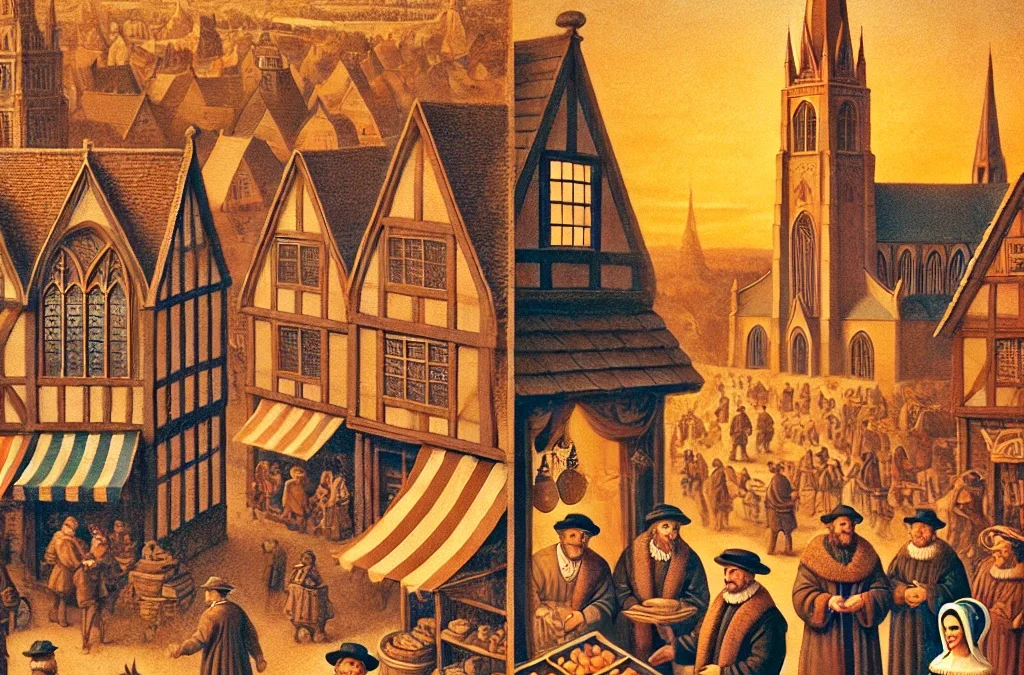
The History of Kingdom Entrepreneurship: Faith-Driven Business Through the Ages
Introduction
The history of Kingdom Entrepreneurship is a fascinating journey of faith and enterprise intertwined. From the business practices of early Christians to the evolution of stewardship and ethics, this history reveals how faith has influenced economies, commerce, and lives across centuries. This post dives deeper into key milestones, influential figures, and examples, answering questions like, “How did early Christian values shape business?” and, “What role did missionaries play in entrepreneurship?” This is a high level look at the early beginnings of Christian entrepreneurship to today.
Let’s explore how Kingdom Entrepreneurship evolved and continues to inspire today’s faith-driven entrepreneurs.
Table of contents
- The History of Kingdom Entrepreneurship: Faith-Driven Business Through the Ages
- Early Christian Business Practices
- The Evolution of Stewardship and Ethics
- Kingdom Entrepreneurship in Historical Contexts
- Influential Figures and Case Studies
- Missionary Impact on Entrepreneurship
- FAQs About the History of Kingdom Entrepreneurship
- Conclusion
Early Christian Business Practices
Faith Meets Enterprise
The origin of kingdom entrepreneurship began with the introduction of the Law of Moses. This was the law given to Moses on Mount Sinai – this was after the exodus of the Hebrews from Egypt. So it was here for the first time that Yahweh literally wrote the social and religious laws, principles and statutes by which man should live in community.
Over the centuries, as the Hebrews multiplied and became dispersed amongst the gentile nations, those laws and principles also spread. They have become so commonplace that several common sayings and maxims used in everyday language even today, have their origins in the Bible.
It has become so embedded that many are often quoted without people realizing they are quoting scripture.
Therefore, over time many believers – and eventually early Christians, began to view their work as indistinguishable from their faith. Biblical principles like honesty, generosity, and justice became integrated into general business practices – and many phrases into the communal psyche.
For many their enterprise resources naturally began to follow their hearts to fund churches, synagogues, support missions, and care for the needy, reflecting the ethos of stewardship.
We will come back to stewardship again later.
Some Examples Where Faith Meets Enterprise
The Apostle Paul, a tentmaker, used his trade to support his missionary work, embodying the principle of self-sustenance combined with ministry.
We also have stories of King Solomon sending merchants to far-flung nations on shopping sprees. By doing this, he was able to raise the GDP of his nation with the sheer quantity of quality goods available – that even the Queen of Sheba marvelled at the appearance of his servants.
King Solomon eventually went overboard of course, but in his youth, he understood the principles of enterprise for the common good.
The Role of the Church in Early Business Development
In early Christian communities, the Church played a vital role in shaping business practices. It was often the Church that provided ethical guidelines and often acted as a mediator in trade disputes to ensure fair dealings among believers. In addition, Monasteries also became centres of innovation, producing goods and managing land while seeking to uphold Christian ethics.
[Explore the Church’s role in shaping business practices]
Biblical Commerce and Trade: Foundations of Kingdom Entrepreneurship
Commerce and trade are prominent themes in the Bible. Ancient Israel’s economy, as described in Scriptures, included fair weights, labour practices, and a focus on just treatment of the poor. These Biblical principles laid the foundation for modern ethical entrepreneurship.
“Honest scales and balances belong to the Lord; all the weights in the bag are of His making.” – Proverbs 16:11
[Discover how biblical commerce influences today’s entrepreneurs]
The Evolution of Stewardship and Ethics
The Evolution of Christian Stewardship: From Biblical Times to Today
The concept of stewardship evolved from the Biblical mandate to “rule over the earth” (Genesis 1:26-28). Over time, Christian thought expanded stewardship to include managing resources responsibly, fostering generosity, and ensuring sustainable growth.
Key Transition: In the Middle Ages, stewardship extended beyond land management to include financial accountability and community welfare.
Several legal principles and concepts from the Old Testament, particularly the Pentateuch (the first five books of the Bible), have significantly influenced Western legal systems. Here are some notable examples:
“An eye for an eye, a tooth for a tooth”
This principle of proportional justice, found in Exodus 21:23-25, has influenced the concept of retributive justice in many legal systems
(Anchor link placeholder: [Read about the history of Christian stewardship])
Impact of the Reformation on Christian Business Ethics
The Protestant Reformation marked a turning point for Kingdom Entrepreneurship. Reformers like Martin Luther and John Calvin emphasized work as a form of worship. This mindset spurred economic development and ethical business practices that laid the groundwork for modern capitalism.
Interesting Fact: Calvin’s teachings on vocation helped reshape societal views on profit, lending, and investment, leading to the rise of faith-based entrepreneurship.
(Anchor link placeholder: [Learn how the Reformation shaped business ethics])
Kingdom Entrepreneurship in Historical Contexts
Kingdom Entrepreneurship in the Middle Ages
Faith-driven entrepreneurs of the Middle Ages operated in guilds, where ethical standards were often informed by Christian values. These organizations emphasized honesty, skill, and service, showing how faith influenced commerce even in complex feudal economies.
(Anchor link placeholder: [Unpack the history of Kingdom business in the Middle Ages])
Christianity and the Rise of Capitalism
The principles of Kingdom Entrepreneurship played a role in the emergence of capitalism. Christian values of work, stewardship, and community responsibility fueled the growth of markets. Churches and religious groups were central to trade and often the first to offer financial services like loans and investments.
(Anchor link placeholder: [Explore Christianity’s influence on capitalism])
Influential Figures and Case Studies
Notable ‘Christian’ Entrepreneurs Through History
As you explore your understanding of what it means to be a Kingdom entrepreneur, you will inevitably come across the misalignment of philanthropy with Christian principles. These are not synonymous.
In fact, a cursory search of the internet suggests that some of history’s most successful entrepreneurs were inspired by their faith, and list people such as the following…let’s look between the lines…
- John D. Rockefeller: Misinformed history describes him as a devout Baptist who credited God for his wealth and gave generously to missions and charities, arguing that the magnitude of his giving was motivated by his faith in God. The immediate question them becomes, which God, because that same history has him strongly criticized as a “robber baron” for his aggressive business tactics and monopoly control.
In 1911, the U.S. Supreme Court found Standard Oil–his corporation–in violation of anti-trust laws and ordered it to dissolve due to its monopoly status. Anti-trust laws are rules that help keep businesses from becoming too powerful that they create a marketplace that is unfair to consumers. Suffice to say, there is nothing about manipulating supply, costs and eliminating the competition for profit at the expense of all others that aligns with Biblical principles.
So be advised that ‘philanthropic work’ does not indicate ones commitment to Biblical principles or that such an individual is intent on creating a win-win situation in which you also get to win. - R.G. LeTourneau: On the other hand was an industrialist known as “God’s businessman,” that tithed 90% of his income. His story is so fascinating that it deserves its own post.
(Anchor link placeholder: [Discover more faith-driven entrepreneurs])
Historical Case Studies in Kingdom Entrepreneurship
Case studies highlight how Kingdom principles have transformed industries.
- Quaker Businesses: Known for their honesty, Quaker entrepreneurs like the Cadbury family created successful enterprises while advocating for worker welfare.
- Mission-Driven Agriculture: Early missionary settlements combined farming with ministry, supporting both local communities and global missions.
(Anchor link placeholder: [Read in-depth case studies])
Missionary Impact on Entrepreneurship
Missionary Entrepreneurs: Spreading the Gospel Through Business
Missionaries often became entrepreneurs to fund their ministries and serve local communities. They established schools, healthcare centres, and businesses that not only met physical needs but also served as platforms for sharing the Gospel.
Example: William Carey, the “Father of Modern Missions,” established printing presses in India to distribute Bibles and educational materials.
(Anchor link placeholder: [Learn more about missionary entrepreneurship])
FAQs About the History of Kingdom Entrepreneurship
- What is Kingdom Entrepreneurship’s origin?
Its official start traces back to the introduction of the Law of Moses at which time Yahweh taught the Hebrews the Kingdom principles for stewarding community life. Of course, commerce pre-dated Moses, such that man simply did what seemed good to him, or followed the dictates of the various Demi-gods of the nations. - How did the Reformation influence Kingdom Entrepreneurship?
The Reformation emphasized work as worship and promoted ethical business practices, laying the foundation for faith-driven capitalism. - Who are some famous Kingdom Entrepreneurs?
Notable examples include R.G. LeTourneau, John D. Rockefeller, and Quaker business leaders like the Cadbury family. - What role did missionaries play in entrepreneurship?
Missionaries started businesses to support their work and meet community needs, often becoming pioneers in social enterprise. - How has Kingdom Entrepreneurship evolved over time?
It has grown from local faith-based initiatives to a global movement influencing industries and economies.
Conclusion
The history of Kingdom Entrepreneurship reveals a rich tapestry of faith-driven business practices that continue to inspire today’s entrepreneurs. By studying these foundations, modern leaders can glean valuable insights for integrating Biblical principles into their enterprises. Whether through stewardship, ethical commerce, or community impact, the legacy of Kingdom Entrepreneurship offers a powerful example of how faith and business can shape the world.